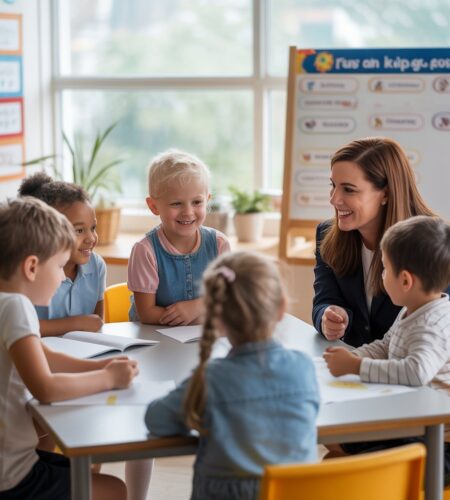
Visualize a classroom filled with students, and each one of them is considering the question that their teacher just asked. Then, in an instant, the teacher gives the magic words: “Turn and talk.” The classroom erupts with meaningful conversations. Students turn to their classmates, exchanging ideas and developing their understanding of the subject through conversations. This is the essence of the turn and talk strategy, which is a teaching technique that turns passive learning into active learning.
The strategy is more than just students talking to each other. The peer discussion technique has been recognized by teachers around the world as an essential element of quality teaching. When teachers use the turn and talk strategy correctly, they are able to create an environment where shy students feel encouraged, struggling students master tough concepts, and gifted students learn leadership skills through peer discussions. Whether teachers are teaching first-grade students or high school students, the teaching strategy can be used for any subject, grade level, or purpose.
What Is Turn and Talk and Why Teachers Use This Strategy?
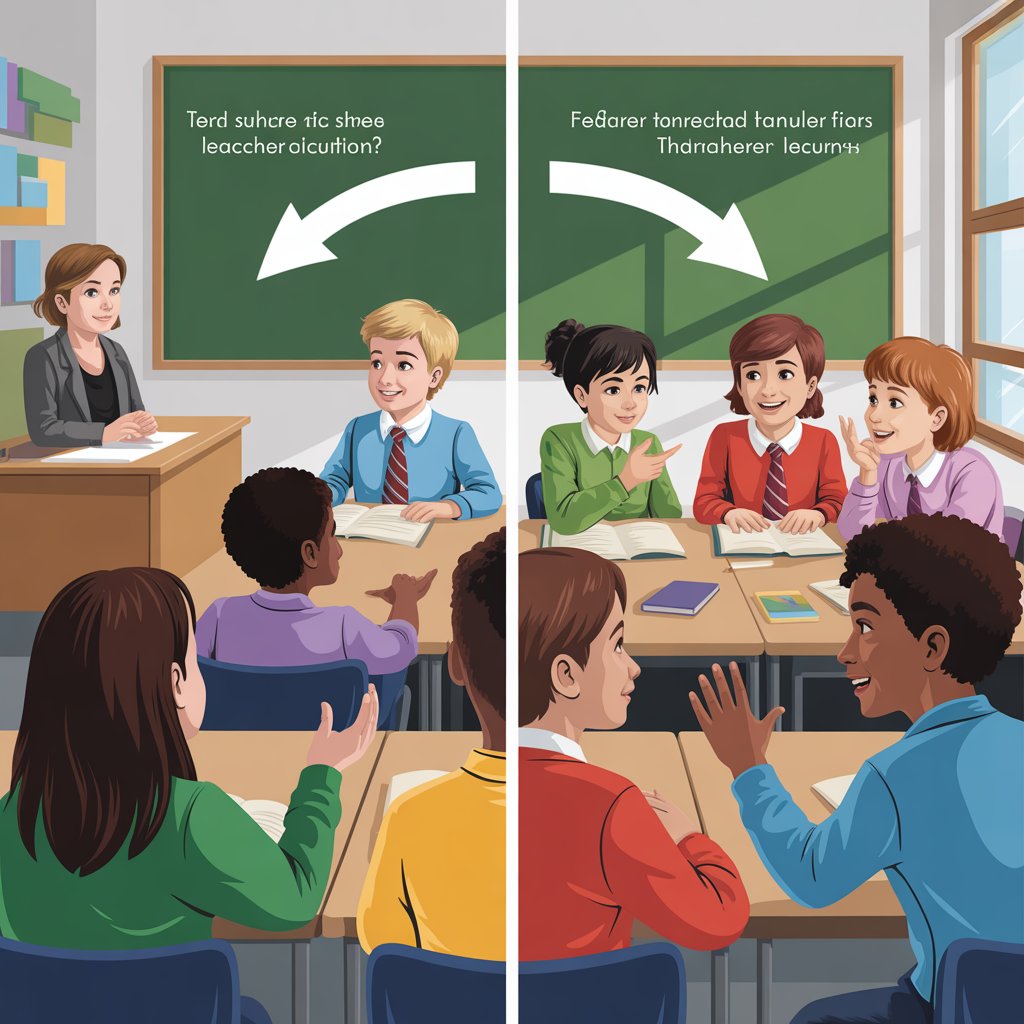
The turn and talk strategy is a very simple, yet incredibly effective teaching strategy. It breaks up the typical flow of direct instruction by giving students a chance to talk with a partner. Rather than simply listening to the teacher talk, students are given a prompt or question and then turn to talk with a partner about their thinking. This quick peer discussion, which might last anywhere from 30 seconds to three minutes, has a huge payoff in terms of learning that extends far beyond those minutes.
Teachers use the turn and talk strategy because it addresses several important needs in today’s classrooms. Students need opportunities to articulate new ideas out loud, to hear the perspectives of others, and to feel confident speaking in front of others. The turn and talk strategy addresses all three of these needs simultaneously. Many teachers have discovered that this type of collaborative discourse is an effective way to increase knowledge of academic vocabulary, to increase understanding of complex subject matter, and to help students remember new information more effectively than a lecture alone.
The reasoning behind is based on the principles of cooperative learning theory, which suggests that students learn more effectively in a peer-to-peer environment than in a solo setting. While whole-class discussions can often be intimidating to shy or hesitant students, turn and talk offers a more manageable option in which every student gets heard. Since students are talking to only one other student, as opposed to the whole class, the intimidation factor of whole-class sharing is significantly diminished. This makes turn and talk an excellent tool for English language learners, anxious students, and slower learners.
How to implement turn and talk in your classroom
Implementing turn and talk effectively in the classroom does not require any special equipment or complicated planning, but teachers who are skilled at turn and talk offer more effective learning opportunities than those who approach it haphazardly.
Step-by-Step Turn and Talk Protocol for Success
Teachers should begin by teaching students the turn and talk procedure before they attempt the strategy during instruction. Show students exactly what turning toward a partner looks like, explain what it means to listen actively, and demonstrate how to stay focused on the discussion topic. Spend several lessons practicing the mechanics of turning and talking so that students develop the habit and respond quickly when they hear the signal.
When teachers feel confident students understand the basic procedure, they can introduce turn and talk into regular lessons. First, the teacher poses a question or presents a discussion prompt that students can understand clearly. A strong turn and talk prompt encourages deeper thinking rather than simple yes-or-no answers. For example, instead of asking “Did the character make the right choice?” a teacher might ask “What would you have done differently in the character’s situation and why?”
Next, the teacher clearly signals that it’s time to turn and talk. Some educators use a consistent phrase like “Turn and talk to your neighbor about…,” while others use visual signals such as hand gestures or projected text. The clearer the signal, the faster students respond and the more purposefully they engage with the discussion activity.
During the talk time, teachers circulate around the classroom, listening to student conversations. Rather than conducting the entire class discussion themselves, teachers gather information about student understanding, misconceptions, and questions. This classroom monitoring provides valuable assessment data about who needs additional support and who is ready for challenge-level tasks.
Managing Turn and Talk Timing and Transitions
Timing is one of the most crucial elements of successful turn and talk implementation. Too little time will frustrate students who are just beginning to engage in substantive conversation, while too much time will cause turn and talk partners to wander off-task. Most teachers find that thirty seconds to two minutes is sufficient for most turn and talk activities, although more complex subjects may require as much as three minutes.
Teachers who effectively implement turn and talk timing communicate transitions through verbal signals. A warning signal is helpful, and teachers can say something like, “You have about thirty seconds left for turn and talk,” to give students a heads up on the transition back to whole-class instruction. Consistency in the transition signal helps students develop routines. Some teachers use visible timers, while others simply count down. The trick is to give students a predictable routine so that they know how much time they have left and when it is time to transition back to whole-class instruction.
Pre-arranged seating patterns help facilitate turn and talk transitions. If students know exactly who they are going to turn to talk to, they will spend less time deciding who to talk to and more time talking. Some teachers assign permanent talk partners, while others rotate partners on a regular basis so that students practice working with different classmates. Either strategy is effective as long as the routine is consistent and clear to all students.
Why Turn and Talk Increases the Effectiveness of Student Learning
Research has proven time and again that students who participate in peer discussions learn more than those who are left to sit through boring lectures. The results are evident in their grades, social-emotional development, and retention of what they have learned.
Building Confidence in Students with Peer Discussion
Many students feel apprehensive about speaking in a large group setting, but they have no problem speaking in a one-on-one or small group setting. Turn and talk is a great way to build confidence in students to speak up in a large group setting. Students become more confident in speaking up in a large group setting after practicing speaking in a partner setting.
Students who are struggling in class will benefit the most from turn and talk. A concept is better understood when it is explained in a kid-friendly way by a classmate with relatable examples. Students learn from each other, and the concept is retained when they realize that many students are struggling with the same questions.
Increasing Class Participation and Student Engagement
The traditional whole-class discussion typically involves only a select few students who are confident in their ability to share their thoughts with the class, while the rest of the class sits quietly. The quietly thinking students may be processing a great deal of information, but unfortunately, the teacher is unable to determine the level of understanding. Turn and talk allows all students to participate in the discussion, providing an opportunity for authentic participation. The teacher can then ask students to report back to the class what their partner has said, allowing the quiet students to contribute without having to think of ideas on the spot.
The engagement that occurs during turn and talk activities goes beyond just speaking. Students who discuss new information are able to connect new ideas to prior knowledge, creating a deeper understanding and encoding information into long-term memory. The cognitive process that occurs during these short discussion times results in a stronger neural pathway and a much higher retention rate than if the students were simply listening to the information. Teachers have noticed that students retain information presented during a turn and talk activity much more thoroughly than information presented in a lecture format.
Turn and Talk Examples by Grade Level
The turn and talk strategy can be implemented in a variety of ways depending on the grade level and the type of information being presented. These examples show how the strategy can be adapted to fit the needs of the students.
Practical Turn and Talk Activities for Elementary Students
A kindergarten teacher reading a picture book might pause and ask “Turn and talk: What do you think will happen next?” Students discuss their predictions with assigned partners, giving the teacher insight into comprehension and prediction skills. After a quick share-out, the teacher continues reading, and students discover whether their predictions proved accurate.
First and second grade teachers frequently use turn and talk during reading instruction. After encountering a new word or confusing sentence, teachers pause and ask students to turn and talk about what the text means in their own words. This peer discussion helps students solidify understanding and identify when meaning has broken down so they can ask for clarification.
Third and fourth grade teachers implement turn and talk across all subject areas. During math lessons, students might discuss different strategies for solving problems. During science, students could turn and talk about observations they made during an experiment. During social studies, students examine historical events from multiple perspectives through partner discussion.
Middle School Discussion Protocols Using Turn and Talk
Middle school teachers recognize that students at this age benefit greatly from opportunities to discuss ideas with peers before sharing with adults. A middle school English teacher might distribute a complicated poem and ask students to turn and talk about images or emotions the poem creates. Before conducting whole-class analysis, students have already engaged in talk partnerships, so classroom discussion becomes richer and more varied.
Middle school science teachers use turn and talk to build scientific thinking. After observing a demonstration, students turn and talk about what they observed and why it happened. This collaborative discussion allows students to consider multiple explanations, challenge each other’s thinking, and develop stronger scientific reasoning than they would develop independently.
Turn and Talk Strategies for High School Classrooms
High school teachers implement turn and talk with added complexity and depth. A history teacher might present primary sources and ask students to turn and talk about bias or perspective represented in the documents. Students discuss not just what the sources say, but what they reveal about the time period and the author’s worldview.
High school English teachers use turn and talk to prepare for Socratic seminars and formal debates. Before whole-group discussion, students rehearse arguments, test ideas, and receive feedback from partners. This preparation makes subsequent whole-group discussion more thoughtful and productive. Similarly, mathematics teachers use turn and talk to help students explain their reasoning and discuss why different solution methods either work or don’t work.
Common Challenges and Solutions
While turn and talk represents a powerful instructional strategy, teachers new to the approach sometimes encounter obstacles that discourage them. Understanding common challenges and knowing how to address them helps educators implement turn and talk successfully.
How to Manage Noise in Turn and Talk Activities
The biggest concern most teachers express involves classroom noise levels. When multiple pairs of students talk simultaneously, the volume increases noticeably. However, noise itself doesn’t indicate an unsuccessful turn and talk activity. Purposeful conversation noise differs greatly from chaotic chatter. To manage volume appropriately, teachers should establish expectations during initial teaching of the turn and talk procedure. Explain that students should speak quietly enough that their partners hear them clearly but not so loudly that everyone else can hear their conversation. Practice maintaining appropriate volume so students develop the skill.
Teachers who remain calm when turn and talk noise occurs send a powerful message that student conversation is valued and expected. If teachers cringe, shush students repeatedly, or communicate anxiety about noise, students receive the message that speaking isn’t really welcome. Instead, teachers should listen for the quality of conversation while students talk, noting which students focus on topic and which ones need redirection.
Ensuring Inclusive Participation in Pair Discussions
Sometimes classroom dynamics create situations where certain students dominate while others remain silent during talk partnerships. Teachers should monitor pair dynamics closely and occasionally rotate talk partners if one pair consistently shows imbalance. Some teachers assign specific roles—one student talks first while the other listens, then they switch roles. This structure ensures more balanced participation.
Consider assigning strategic partners thoughtfully. While teachers can let friends choose each other sometimes, intentional partner selection supports better inclusion. Pairing a dominant talker with a student who needs encouragement to speak sometimes creates productive balance. Similarly, pairing two quiet students together might enable both to participate more than they would with more verbally assertive partners.
Teachers should also modify talk prompts for students with different language levels or processing speeds. Some students might need a prompt written on the board so they can reference it during discussion. Other students might benefit from a few seconds of quiet thinking time before talking begins. These small adjustments ensure that all students can access the turn and talk strategy meaningfully.
Frequently Asked Questions About Turn and Talk
What is turn and talk in the classroom? Turn and talk is a brief peer discussion where students temporarily pause instruction to talk with a partner about a prompt or question, then the teacher resumes whole-group instruction.
How long should turn and talk activities last? Most turn and talk discussions work best when they last between thirty seconds and two minutes, though complex topics might extend to three minutes.
Can teachers use turn and talk across all grade levels? Yes, turn and talk adapts effectively from kindergarten through high school, with implementation depth and complexity increasing with grade level.
Why do students learn better through turn and talk than through lectures alone? When students discuss ideas aloud, they process information more deeply, hear alternative explanations from peers, and encode content into long-term memory more effectively.
How do teachers keep turn and talk focused and productive? Clear protocols, consistent signals, thoughtful partner assignment, purposeful prompts, and regular monitoring during the activity all contribute to productive turn and talk.
Does turn and talk work for all types of content? Turn and talk works exceptionally well for discussion-based content, but teachers can also use it after reading passages, watching videos, or conducting observations to help students process what they experienced.
What should teachers do if students don’t know what to talk about during turn and talk? Providing specific, clear prompts guides conversation effectively; teachers should practice turn and talk regularly so students develop comfort with the strategy and understand expectations.
Conclusion
The turn and talk strategy represents one of the most accessible yet powerful teaching methods available to educators at any grade level. By creating regular opportunities for peer discussion, teachers activate student thinking, build confidence, increase engagement, and improve learning outcomes. When teachers implement turn and talk with clear protocols, purposeful prompts, and consistent practice, they transform their classrooms into vibrant learning communities where every voice matters.
Students need opportunities to think out loud, to hear from classmates, and to organize their understanding through conversation. The turn and talk teaching method creates exactly those opportunities in ways that feel simple and natural. As educators continue seeking ways to increase student engagement and achievement, the enduring power of turn and talk remains a reliable tool that serves learners well across subjects, grade levels, and learning styles. Whether teachers are just beginning to explore collaborative discussion strategies or refining their existing practice, implementing or strengthening turn and talk in daily instruction yields measurable benefits for student learning and classroom culture.